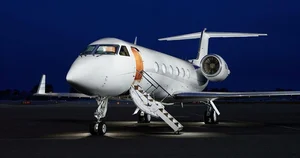
First Time Flying Private? A First-Timer’s Guide to Booking a Private Jet Charter
If you've only ever flown commercial, your first private charter changes everything you think you know about air travel. No terminals, no lines, no waiting at a gate. But how does booking actually work — and what should you expect on the day? Here's the complete guide.
HOW BOOKING A PRIVATE JET CHARTER WORKS
2. Get a quote. A charter consultant sources aircraft and sends you options. Good quotes show all-in pricing — base rate plus fuel, crew, landing and handling fees, taxes, and catering — not just a headline hourly rate. Always ask what's included and what's pass-through before you compare.
3. Sign the contract. Once you accept a quote, you'll execute the charter agreement. Read the c
THE FET LINE ON YOUR QUOTE: WHAT IT IS
THE DAY OF: ARRIVING AT THE FBO
You'll depart from a private terminal called an FBO — a fixed-base operator — usually a separat
Private aviation feels effortless on the day precisely because the work happens beforehand — in the quote, the contract, and the passenger manifest. Now you know what's happening behind that effortless feeling.
Ready for your first flight? Approved Jets arranges on-demand private charter with transparent all-in pricing and white-glove trip planning. Get a quote or call +1 (866) 678-1411.
A FEW FIRST-TIMER TIPS
- Book ground transportation through your charter company. Door-to-door is the point of flying private; most FBOs can have a car waiting planeside.
- Be honest about your schedule. Charter is built around you, but crew duty-time rules are real. Late changes can trigger overtime or repositioning charges.
- Tipping isn't expected, but it's appreciated for standout service — cabin crew, pilots, and line crew included.
- Communicate early, enjoy fully. The one advantage of private aviation is customization. The earlier your broker knows your preferences, the better the experience.
ONBOARD: WHAT TO EXPECT
Your crew will meet you before departure and deliver a short safety briefing — listen closely and ask questions; on a private jet, the crew is right there with you. Welcome drinks and snacks are standard; if you arranged catering, it'll be onboard and ready. Tell your broker your food, drink, and entertainment preferences when you book, not on the day — that's how you get the menu you want instead of the default one.
Pets fly in the cabin on most charters (unlike commercial airlines), but bring vaccination records and any required health certificates, and confirm with the broker at booking.
On baggage: private jets don't have airline-style weight limits or bag fees, but baggage space depends on the aircraft type. A full cabin on a light jet has far less room than a heavy jet's hold. Communicate your luggage — golf clubs, skis, trade-show cases — before you sign, not on the ramp.e building from the main airline terminal. Your charter company will send exact directions and parking instructions. Plan to arrive 20 to 30 minutes before departure (30 for international, so the crew can clear paperwork). You'll pull right up to the building, check in with the front desk, and wait in a quiet lounge with Wi-Fi and refreshments.
Security screening is quick and private — no long lines, no unpacking your bag. From there, you're escorted directly to the aircraft. The crew loads your luggage, you step aboard, and you're airborne minutes after arriving. That's the entire airport experience.
On every U.S. domestic charter invoice you'll see FET — the Federal Excise Tax. It's 7.5% of the amount paid for taxable air transportation under IRC §4261(a), and it applies to charter flights. On top of that, there's a domestic segment fee of $5.30 per passenger, per segment for travel in calendar year 2026, and a $23.40 per-passenger international arrival/departure tax on flights beginning or ending outside the U.S. The operator collects these and remits them to the IRS on Form 720. When a quote seems "too good," check whether FET is included — reputable brokers always show it.ancellation terms carefully — they vary by operator and how close to departure you cancel.
4. Pay. Most operators require payment in full on acceptance, via wire transfer or credit card (cards often carry a processing fee; wires don't). A card is usually kept on file for incidentals. Trips can be confirmed with as little as four hours' notice on many routes — or booked months ahead for peak-season travel.
5. Send passenger details. Expect a request for full names as they appear on passports, dates of birth, and passport numbers for international flights, usually 24 to 48 hours before departure. That's it — no boarding passes, no check-in apps, no seat assignments.
The whole process is simpler than most people expect. It follows five steps:
1. Define your trip. You'll need your origin and destination, travel dates and times, number of passengers, expected luggage, and any aircraft preferences or amenities — catering, Wi-Fi, pets traveling along, ground transportation on arrival. Know these before you call and the rest moves fast.